Understanding how communication works is only the beginning.
What really shapes your experience in Japan is what happens in your daily routine. How work is structured, how expectations are set, and how people behave around you.
This is where the differences become very real.
Communication with Your Manager
In many Western companies, communication with your manager tends to be more casual.
Managers are expected to be approachable. You can raise concerns openly, ask for support when needed, and build a relationship that helps you perform better.
In Japan, the dynamic is different.
Communication with your manager is usually more formal, with a clear sense of distance. Because of the hierarchy system mentioned in Part 1, managers may prefer space, and direct questioning of their ideas is not always expected.
A useful way to think about this is to treat your manager as a key stakeholder.
If you disagree:
- Do it privately
- Be subtle in how you present your view
- Guide the conversation instead of challenging it directly
The goal is not to create tension, but to maintain a smooth working relationship.
It is also worth remembering that not everyone shares the same long-term goals. Some people plan to stay in the same company for many years, so maintaining harmony is especially important for them.
Job Scope
In many countries, job descriptions are clearly defined.
You know what is expected of you and what skills you need to succeed.
In Japan, roles are often more flexible.
This is sometimes referred to as a “membership model,” where you are part of the organization first, and your responsibilities may shift depending on business needs.
You may start with a general idea of your role, but over time, you will be asked to support different areas based on your manager’s direction.
This approach encourages teamwork and shared responsibility. At the same time, it can feel unclear if you are trying to build deep expertise in a specific field.
For some, this is a great way to gain broad exposure. For others, it may feel like progress is less structured.
Promotions
Promotion in Japan often depends on a combination of seniority, consistency, and relationships.
Fast promotions, which can happen in some Western companies, are less common.
Doing your job well is important, but visibility does not always come automatically. Building trust with your manager and maintaining strong working relationships plays a key role.
In this environment, interpersonal skills become just as important as technical skills.
Risk-Taking
Japanese organizations tend to be more cautious when it comes to risk.
Decisions are carefully considered, and there is a strong preference for stability and reliability.
A good example of this can be seen in product development.
Historically, Japanese companies focused on releasing products only when they were close to perfect. In contrast, many global companies release products earlier and improve them over time based on user feedback.
Neither approach is right or wrong.
One prioritizes quality and trust from the start. The other prioritizes speed and adaptability.
Understanding this difference helps explain why processes in Japan may feel more detailed and structured.
Change Management
Because of this cautious approach, change tends to happen more slowly.
When something needs to change, it is usually:
- Carefully planned
- Structured step by step
- Reviewed at multiple stages
This ensures alignment and minimizes risk.
For those used to fast-paced environments like tech or startups, this can feel slow. But once a decision is made, it is often followed through with consistency.
Work-Life Balance
Work-life balance is an area that has been evolving.
The government has introduced initiatives to improve working conditions, and many companies are making changes.
At the same time, practices still vary depending on the company, industry, and location.
In some environments:
- Flexibility is increasing
- Overtime is being reduced
In others:
- Presence is still valued
- Team expectations may influence your schedule
Observing your workplace culture will help you understand what is expected.
Social Expectations
With a more formal work environment, you might wonder how people build relationships.
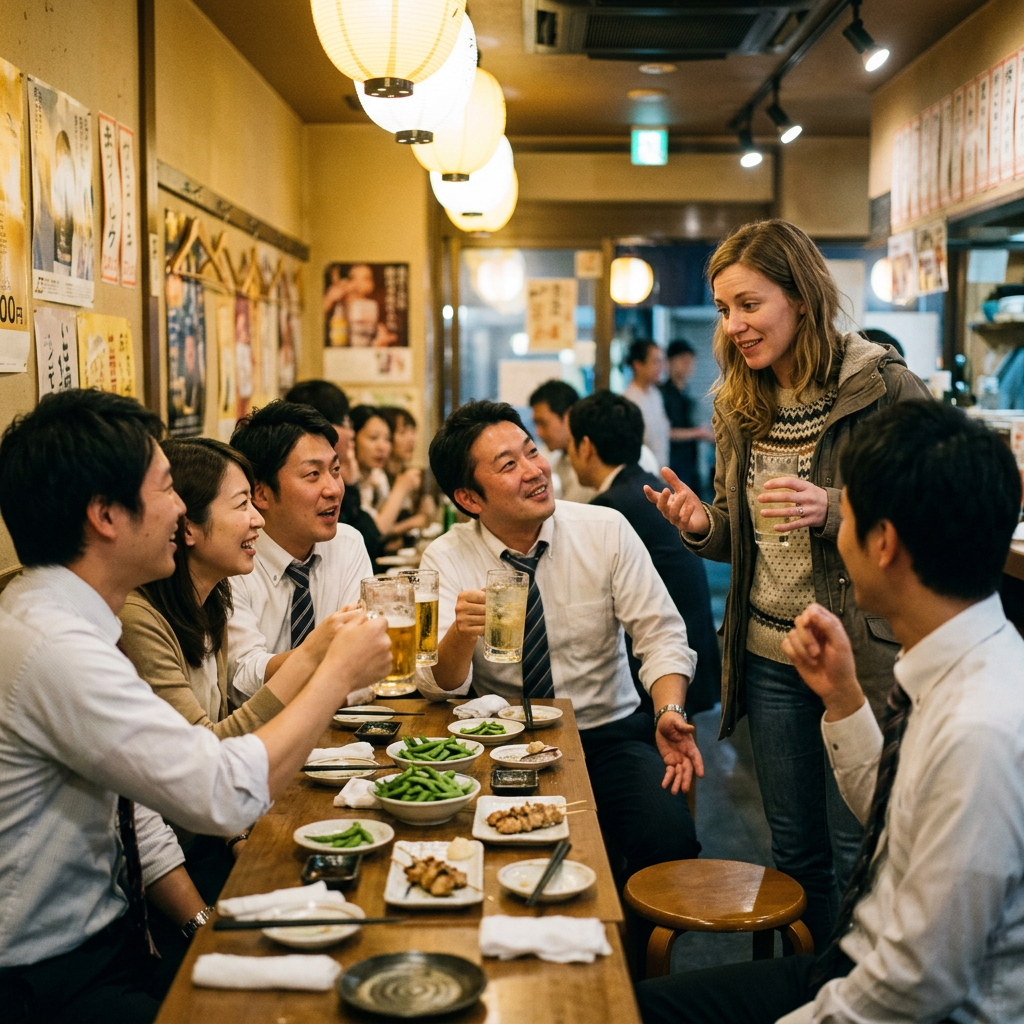
One common way is through “nomikai,” or after-work gatherings.
These are informal settings where people feel more comfortable speaking openly.
While participation is becoming more optional in some companies, these events still play a role in building relationships and trust.
Attending from time to time can help you connect with colleagues in a different way than in the office.
Final Thought
Working in Japan is not about one system being better than the other.
It is about understanding that the environment is different.
Many of the practices in Japan are built around:
- Stability
- Trust
- Long-term relationships
- Maintaining harmony
Once you understand this, things that initially feel confusing start to make more sense.
If you come in expecting everything to work the same as your home country, it can be challenging.
But if you take the time to observe, adapt, and understand the context, Japan can offer a very structured and stable environment to grow your career.
 Japan Career Lab
Leave a comment