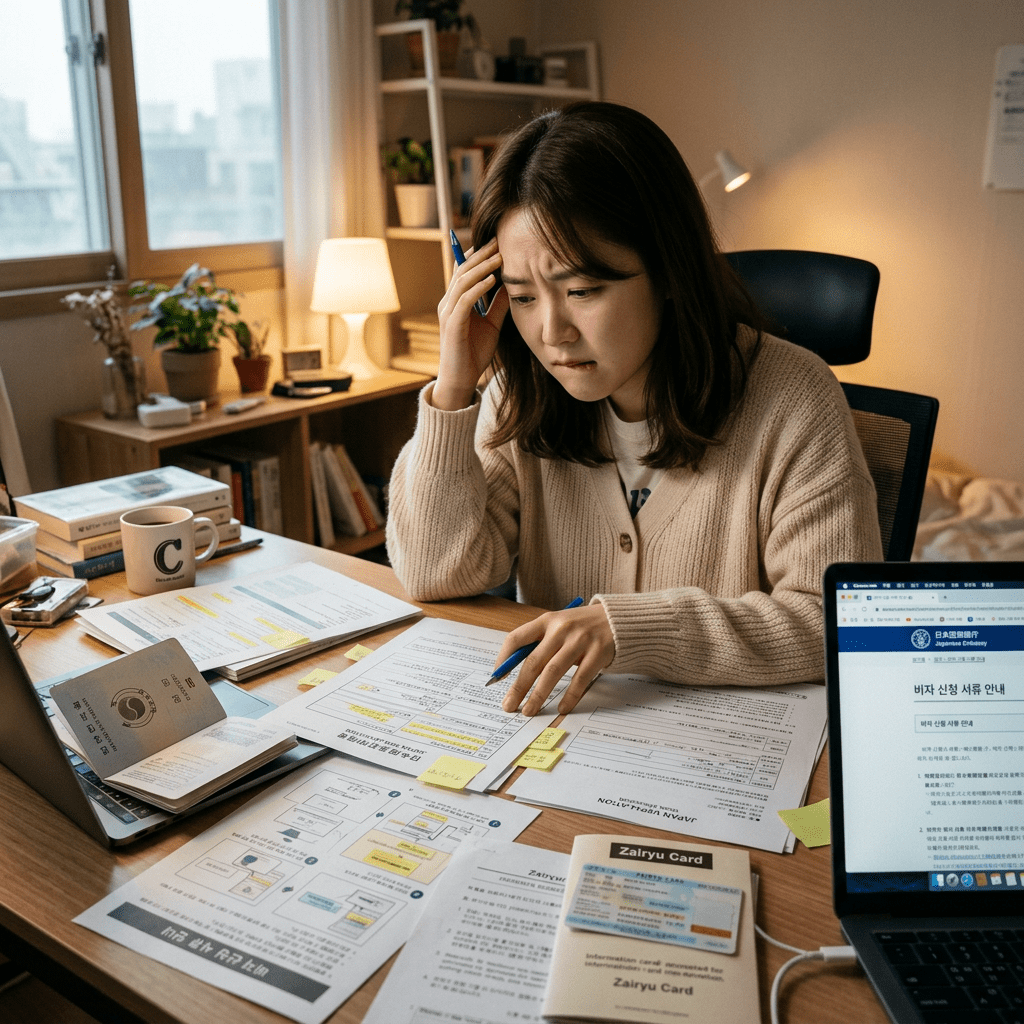
One of the first things people think about when moving to Japan is the lifestyle.
The food. The safety. The trains. The culture. The convenience.
But before any of that, there is one question you need to answer clearly:
How will you legally stay in Japan?
Japan has different visa categories depending on your purpose. Some allow you to work. Some allow you to study. Some allow you to stay because of family status. Some are temporary and do not lead to long-term residence.
So before planning your apartment, your job search, or your new life, you need to understand which path actually fits your situation.
Work Visa
This is the most common route for people who want to build a career in Japan.
A work visa usually requires a job offer from a company in Japan. The company supports your application, and your visa is connected to the type of work you will do.
Common work visa categories include:
Engineer / Specialist in Humanities / International Services
This is one of the most common work visas for corporate roles. It can cover areas such as IT, engineering, sales, marketing, finance, translation, interpretation, customer support, and international business.
Instructor
This is often used for people working as language teachers, especially in schools or education-related roles.
Highly Skilled Professional
This is designed for people with strong qualifications, higher income, specialized skills, or advanced professional experience. It can also offer advantages for long-term residency depending on your situation.
Business Manager
This is for people who want to run or manage a business in Japan. It is not as simple as “opening a small company.” You need to meet business and immigration requirements.
In practice, you are expected to invest at least 5 million yen into your business or demonstrate a similar level of operational scale, such as hiring employees and securing a dedicated office. While you may hear higher figures mentioned, those are usually tied to specific local programs or business realities, not the standard immigration requirement.
The important thing to remember is this:
You usually cannot just arrive in Japan and freely work any job. Your visa must match your activity.
Student Visa
A student visa is another common path.
Many people come to Japan through:
- Japanese language schools
- Universities
- Vocational schools
This can be a good entry route if you want time to learn the language, understand the country, and prepare for future work.
But a student visa is not the same as a full work visa. There are limits on how much you can work part-time, and you usually need permission to work while studying.
Spouse or Family-Related Visa
If you are married to a Japanese national, or in some cases connected to a permanent resident or long-term resident, you may qualify for a spouse or family-related visa.
This type of visa can give more flexibility than many work visas because your stay is based on family status rather than one specific employer.
But it is also reviewed carefully. Immigration will look at whether the relationship is genuine and whether your life in Japan is stable.
There is no minimum required duration of marriage to apply for a spouse visa in Japan. In theory, you can apply as soon as your marriage is legally registered.
However, in practice, immigration will closely review your relationship.
They will assess:
- Whether the marriage is genuine
- How long you have known each other
- Your communication history and background
- Your plans to live together in Japan
- Financial stability and ability to support your life
If the marriage is very recent, expect more scrutiny. You may be asked to provide additional documents such as photos, messages, or proof of your relationship history.
Another important point is that a spouse visa allows you to work freely in Japan, without the restrictions tied to standard work visas. This makes it one of the most flexible visa types.
At the same time, your residency status depends on the continuation of the marriage. If the relationship ends, your visa status may also be affected and reviewed by immigration.
Digital Nomad Visa
Japan also introduced a digital nomad visa under the Designated Activities category.
This is for people who work remotely for companies or clients outside Japan.
It can be attractive if you want to experience Japan while keeping your overseas income. But it is important to understand the limits.
The stay is up to six months, and it is not extendable. Japan also requires remote work from outside Japan and a minimum annual income of 10 million yen, based on official tourism guidance. (Japan Travel)
So this is not a long-term relocation visa. It is more suitable for temporary remote work in Japan.
Working Holiday Visa
For eligible nationalities, the working holiday visa can be a flexible way to experience Japan while doing temporary work.
This is usually better for younger people who want to explore the country, improve Japanese, and take short-term jobs.
It is not designed as a long-term career visa, but it can be a useful first step.
Eligible Countries
As of now, Japan has working holiday agreements with:
- Australia
- New Zealand
- Canada
- United Kingdom
- Ireland
- France
- Germany
- Denmark
- Norway
- Iceland
- Sweden
- Netherlands
- Spain
- Portugal
- Poland
- Austria
- Hungary
- Czech Republic
- Slovakia
- Lithuania
- Estonia
- Latvia
- Finland
- Belgium
- Luxembourg
- Switzerland
- Italy
- Chile
- Argentina
- Uruguay
- South Korea
- Taiwan
- Hong Kong
Permanent Resident
Permanent residency is not an entry visa.
It is something you may apply for after building a stable life in Japan over time.
It usually requires a strong record of residence, income, tax payments, social insurance payments, and good conduct.
So if your long-term dream is to settle in Japan permanently, you need to think beyond “how do I enter Japan?” and also ask:
How will I build a stable record once I am here?
The Main Point
Your visa decides what you can realistically do in Japan.
It affects:
- Whether you can work
- What type of work you can do
- How long you can stay
- Whether your family can come
- Whether Japan can become a long-term home
This is why visa planning should come before lifestyle planning.
Japan can be a great country to live in, but the system is structured. If you understand the rules early, your move becomes much easier.
If you ignore them, Japan can become stressful very quickly.
Before moving, start with one question:
Which visa path actually matches the life I want to build in Japan?
 Japan Career Lab
Leave a comment